ABS Warning Light: Causes and What To Do
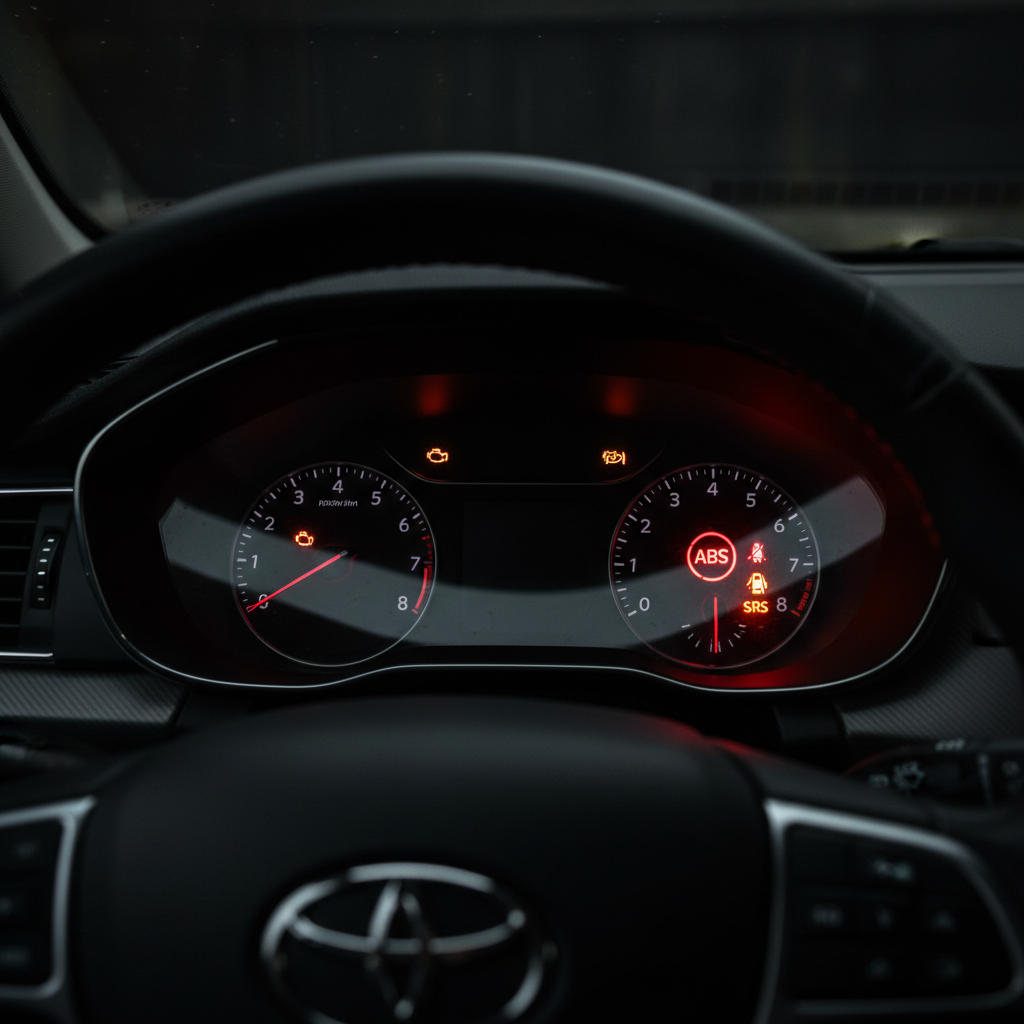
When the ABS warning light stays on, your anti-lock braking system has detected a fault and switched itself off. Your normal brakes still work — but the anti-lock protection won't be there in an emergency stop or on a wet road.
Common causes
- Wheel speed sensor faults — the most frequent cause. Sensors live near the wheels where road grime, heat and damage take their toll.
- Damaged sensor rings — cracked or dirty rings give erratic readings.
- Wiring and connectors — corroded or broken wiring to a wheel, especially after wiring has been snagged or rodents have been at it.
- Clock spring faults — when steering-wheel controls and the airbag light are also misbehaving.
- Module faults — less common, but real. Some modules also store crash data after an accident, which must be cleared before the system returns to service.
Is it safe to drive?
Short answer: carefully, and not for long. Brakes still work, but in a panic stop a wheel can lock and you can lose steering control on slippery surfaces. Treat an ABS light like a worn tyre — get it sorted promptly.
How we diagnose it
We scan the ABS/ESC module, read live wheel speed data from all four corners while driving, and compare readings. One wheel reading zero or dropping out tells us exactly which corner to inspect — sensor, ring or wiring. After repair, we verify the light clears and the system performs a correct self-test.
If your airbag (SRS) light is also on, mention it when booking — we diagnose ABS and airbag systems together, and both are safety-critical.
At AutoLogic Diagnostics, this kind of fault finding is supported by MechanIQ Diagnostic Intelligence — our evidence-driven diagnostic platform.