Why Does a Car Crank But Not Start?
A cranking engine that won't fire is one of the most common call-outs we get in Witbank. The good news: every engine needs the same three things to run — spark, fuel and compression — and diagnosis is a process of elimination.
Start with the basics
- Battery voltage: a battery that cranks but dips too low can leave ECUs and injectors without stable power. Modern vehicles are surprisingly sensitive to voltage.
- Immobilizer: if the anti-theft light behaves oddly, the immobilizer may be cutting fuel or spark. Key and immobilizer faults are a frequent cause of a perfect-cranking, no-start condition.
- Fuel: listen for the fuel pump priming when you switch on. A failed pump, relay or clogged filter means no fuel delivery.
- Spark: on petrol engines, failed coils or crank/cam sensors can cut ignition. A failed crank sensor often kills both spark and injector pulses.
- Timing and compression: a slipped timing belt or chain produces a cranking engine with no compression. This is a tow-truck situation, not a roadside fix.
How we diagnose a no-start
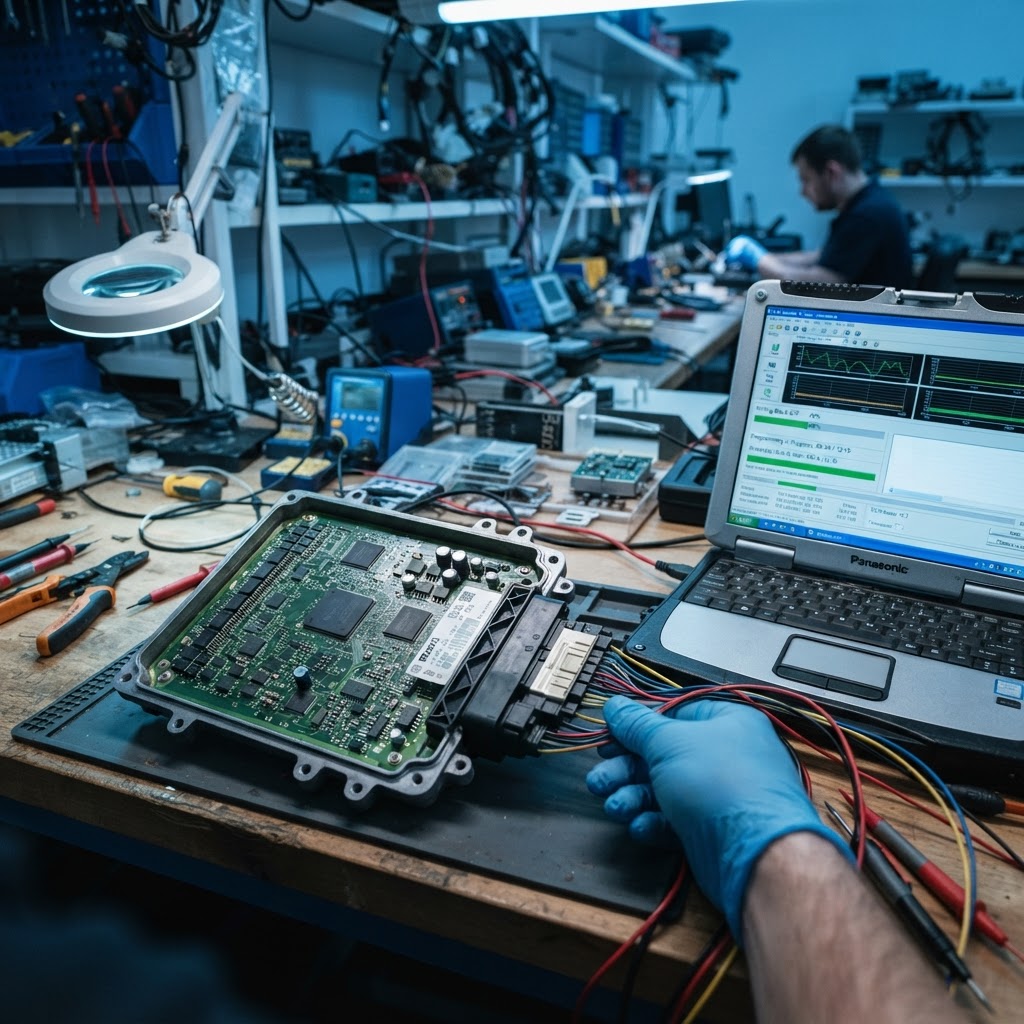
We connect professional diagnostic equipment first: if the ECU won't communicate at all, the fault is in power supply, grounding or the module itself. If it communicates, we check crank/cam sync, injector pulses, fuel pressure and immobilizer status on live data. This separates an electrical fault from a fuel fault from a mechanical fault in minutes — without replacing parts on a guess.
Diesel-specific notes
Diesels that crank but don't start usually have a fuel supply problem (air in the fuel lines, failed lift pump) or a low-compression problem when cold. Glow plug faults matter most in winter mornings.
If your vehicle cranks but won't start, don't keep cranking — you can flatten the battery and flood the engine. Book a no-start diagnosis or call us on WhatsApp and we'll advise you.
At AutoLogic Diagnostics, this kind of fault finding is supported by MechanIQ Diagnostic Intelligence — our evidence-driven diagnostic platform.